



Jay Flemma continues his adventures along England’s fabled Golf Coast. Enchanting and spellbinding, the northwest England is home to one stunning links after another, heathland or coastal, or sometimes both take your pick. Eight clubs stand out, three of them being Open Championship venues: Royal Lytham and St. Anne’s, Royal Birkdale, Royal Liverpool, Formby Golf Club, Southport and Ainsdale, Hillside Golf Club, Wallasey Golf Club, and the West Lancashire Golf Club. In this episode, Jay sets the table for his imminent return to England.
The rousing success of the Lytham-Formby-Hoylake leg of the Northwest Links of England golf assignment was still reverberating when it was wheels down once again, this time in Liverpool as opposed to Manchester.
One of the truly great pockets of golf on the planet, the hurly-burly sand dunes covered in shaggy marram grasses are downright atmospheric not merely for the wild, moon-like vistas, but also for the incomparable, dramatic history played out over them. A trip to Lancashire and Wirral is a journey back to the formative years of golf, to holy ground on which to genuflect reverently.
We’ve discussed Royal Lytham and St. Annes and Royal Liverpool already with even more to come, along with stories from Formby Golf Club on deck. For Act II of this five-act play of great English Golf it’s a second set of rounds along the seaside, this time at Wallasey Golf Club, The West Lancashire Golf Club, and Southport and Ainsdale. When the Open comes back to Southport and Royal Birkdale next July, I’ll be there and at both Hillside, the last great English seaside links of the northwest and – BONUS! SURPRISE! – a round at Alister Mackenzie’s wondrous heathland design Reddish Vale.
Join Golf News Net for $10 per year, and go ad-free!Let’s set the table for the rest of this long series of stories with a quick thumbnail sketch of the remaining five great northwest links. Full-length stories will be forthcoming on each of these courses over the next few weeks.

Royal Birkdale
Although Birkdale premiered relatively late on the Open Rota, it quickly became a permanent and iconic fixture. Oh, the drama played out amid and around those heaving mounds! We were introduced to Birkdale by strapping Australian Peter Thomson: he of the distinctive pompadour hair and the Hollywood good looks and jawline. Thomson won five Open Championships, the bookends of which were at Birkdale, in 1954 and 1965, the latter over the great triumvirate of Arnold Palmer, Jack Nicklaus, and Gary Player.
The ”Swingin’ ‘60s” were even more glorious for Royal Birkdale as it hosted three Open Championships and two Ryder Cups between 1961 and 1971. The first of those Opens was where Arnold Palmer famously slashed his way to victory in 1961 with a six-iron from the deep rough through a driving rain storm, setting up the crucial birdie in the clutch on Sunday -- the defining shot of the tournament. His victory was pivotal in sparking an American revival of interest in the Open Championship. It’s been called by quintessential British golf writer John Hopkins called “one of the 10 greatest golf shots of all-time” for both its precision in the clutch and its historical impact on our game.
Interesting factoid: Palmer was also the first of four Birkdale champions that won there as part of back-to back triumphs -- Palmer in ’61 and 62 (Birkdale, Troon), Lee Trevino in ’71 and ’72 (Birkdale, Muirfield), Tom Watson in ’82 and ’83 (Troon, Birkdale), and Padraig Harrington, 2007 and 2008 (Carnoustie, Birkdale).
The 1969 Ryder Cup featured the Concession, Jack Nicklaus’s gracious conceding of a miss-able putt to Tony Jacklin, allowing Great Britain and Ireland to tie the match 14-14, but for the USA to retain the Cup. If only the Ryder Cup spirit were the same at Bethpage. Still the Concession has inspired tournaments and clubs in its honor, preserving and promoting its precious legacy.
Another Open followed in 1976, where Johnny Miller romped to his second major championship title. That year, the 13th played as a par 5, and his chip-in for eagle sealed his runaway victory. Popular and affable Ian Baker-Finch (1991), Mark O’Meara (1998, the same year in which he won the Masters), and Jordan Spieth (2017) round out the Open champions crowned at Birkdale.
Founded in 1889 over a nine-hole course leased from a local council, Birkdale founding members were evicted in 1897 and moved to the present site where George Low laid out the first 18 holes. The majority of what we find now was laid out by Fred Hawtree, Sr., and J.H. Taylor in the 1930s. It was to host the 1940 Open, but World War II cancelled that plan.
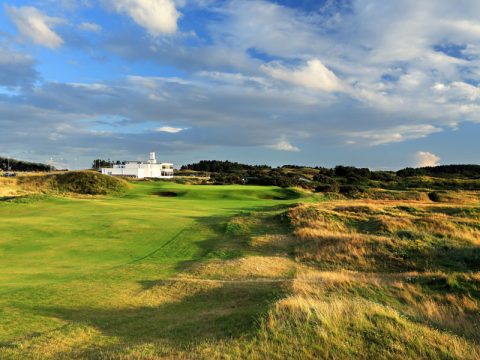
Called the largest and most extensive duneland in England, fairways run through the alleys between the avenues of sand dunes where spectators gather on their ridgelines. Like West Lancashire and Wallasey, the course returns to the clubhouse at the ninth. The rough is extremely punishing with gorse, willow scrub, and buckthorn as well as thick marram grass and fescues.
Birkdale features what many call the toughest opening hole on the Rota and an opening stretch of holes to rival Winged Foot or Olympic club for ferocity. It underlines how amazing a day Ian Baker-Finch had in 1991: 5 under after the first seven holes and a 29 on the front, he cruised to the claret jug and golf immortality.
“I still go back and play RBGC as often as I can,” Baker-Finch recalled fondly.
And, of course, who could forget two of the best bunker names in golf -- Scylla and Charybdis guarding the 17th. And as you walk up the final fairway, drop a ball about 200 yards out and try to replica Tom Watson’s final stroke to the home hole in 1983 as he secured his fifth claret jug. Indelible memories over a blessed plot. July 2026 can’t get here fast enough.
Southport and Ainsdale
Tommy Fleetwood may have grown up at Formby Hall Golf Club, but when his ship came in, he joined Southport and Ainsdale, host of both the 1933 and 1937 Ryder Cup matches. And once you get a look at the routing, the bunkering, and the terrain, you instantly understand why.
“I played Southport loads when I was a youngster. It’s probably my favorite in the area,” stated preeminent UK golf architect Mike Howard. “It has a little bit of everything and some quirkiness. It’s a good golfer’s golf course.”
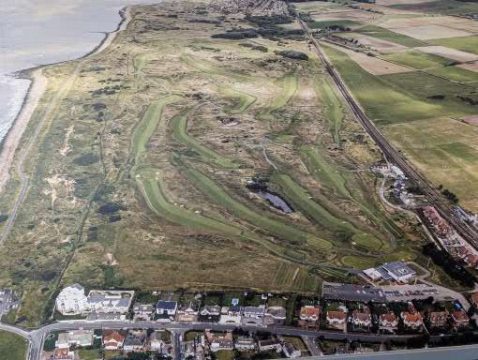
Howard’s assessment is spot on. S and A, as it’s known to its friends, shows you many faces with varied terrain, character and strategy-filled quirks, and good green movement. Like Royal Lytham and St. Annes, the course opens with a long, well-bunkered par 3. Unlike Lytham’s opening fairway – mild and benign for a links – the heaving mounds and shaggy rough at S and A portend a wild ride around one of the most varied parcels of property among the northwest links.
“It’s one of the most intimidating first tee shots anywhere,” Howard admitted. “Trying to hit into that green with everyone watching from the clubhouse and the veranda is tough on the nerves!”
Over the course of your day, over the out-and-back links routing, you’ll hit tee shots between mountainous dunes akin to the fabled “Pillars of Hercules,” you’ll skirt center-line bunkers, you’ll ascend a mighty summit before descending dizzyingly to the 16th green, and you’ll walk in over a century of history of one of the world’s most sterling clubs.

“That 16th hole is all-world,” Howard stated. “I think the world’s best courses have specific features that make them more memorable and 16 is one of them.”
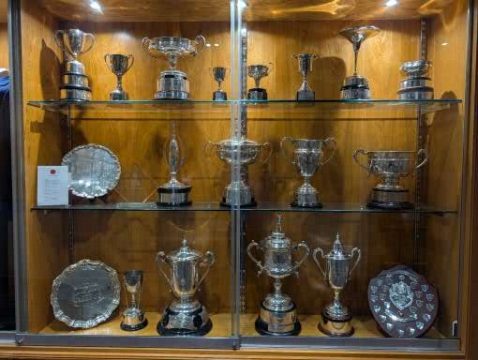
Southport and Ainsdale is as singular an experience as Royal Lytham; a devastating synergy of brilliant golf architecture and venerable, indeed indelible history. It all makes for an unforgettable day of golf and a walk through the clubhouse is an imperative as it is a veritable museum of the game’s most storied lore.
The West Lancashire Golf Club
Here’s a surprise. I asked PGA Tour professionals for their favorite English links course. They all said West Lancs. Then I asked the Korn Ferry Tour players. They all said West Lancs. The caddies? West Lancs! All the best players and industry people -- almost unanimously -- said the West Lancashire Golf Club is their favorite.
Once you step out on to the tee box amidst a 25 mph crosswind off the Mersey River, you’ll know why.
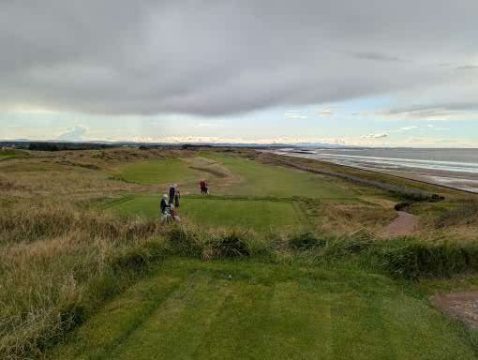
Bernard Darwin called West Lancs the most authentic links in England, and he may be right. Rumpled fairways, a flummoxing crosswind for a prevail, phenomenal green complexes and a cunning routing keep you thinking on every stroke.
West Lancs is especially known for its green complexes, particularly long trenches of short grass ringing several of the greens. Other greens feature treacherous runoffs in any number of directions. A shotmaker’s course, while the fairways are generally wide, West Lancs requires laser precision on second shots or the green complexes’ knolls, knobs, and ridges will send the ball scurrying off in any direction except closer to the hole.

As primal of a links as you will find anywhere on the planet, rounds at West Lancs are always atmospheric, and not just because furious storms can brew up along the links without warning. Make the course an imperative when planning your visit, and you’ll remember the round for the rest of your days. Better still, they give you a free airplane bottle of their most excellent in-house branded Scotch, some of the finest this golfer has ever tasted.
Wallasey Golf Club
Perhaps the prettiest course, and possessing the biggest dunescape of all, Wallasey Golf Club is spoken of in holy whispers by the golf cognoscenti. Two crucial historical moments vault Wallasey into the conversation of the world’s greatest links: legendary Old Tom Morris designed much of the golf course, and Dr. Frank Stableford perfected and employed his Stableford scoring system here.
Over the last 15 years, the club has made remarkable strides, and the course’s reputation has risen dramatically, both locally and internationally. Much of the credit goes to an outstanding greenskeeping staff that is the talk of all England with the way the club has skyrocketed back to prominence among the great links.
Still, I feel Wallasey is still woefully underrated. Majestic views across the Irish Sea, mountainous dunes that dwarf golfers beneath them swallowing them whole should they venture too far off line, and the glorious edifice of St. Nicholas Church standing sentinel over all.
Bobby Jones dropped a ciggy off the rooftop one afternoon and started a brush fire that had to be put out by the local brigade. Bobby started that round 2 over, for sure.
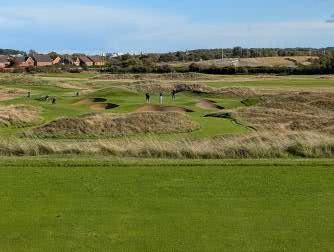
Hillside Golf Club
Remember all those golfers that raved about West Lancs? Well, they also had a corollary to their advice: The back nine of Hillside may the best nine holes of the whole region.
“I can see that,” mused Tom Mackenzie.
“Oh, yes. They may absolutely may be right,” agreed American quintessential golf architect Rees Jones.
Tucked cozily between Birkdale and Southport, the modern course was created by Fred Hawtree in the 1960s, after parcels of the original were traded in a land swap.
Venerable and elite events hosted include the European PGA Championship, the British Masters, the English Open, three Amateur Championships (1979, 2011, and 2023), the English Amateur, and the Brabazon Trophy, as well as numerous qualifiers for The Open Championship.
Hillside is similar to Formby as some holes are framed by mature pine trees. Yet, Hillside’s indelible towering dunes, particularly on the back nine, are its most iconic feature.
